Pemba Sherpa
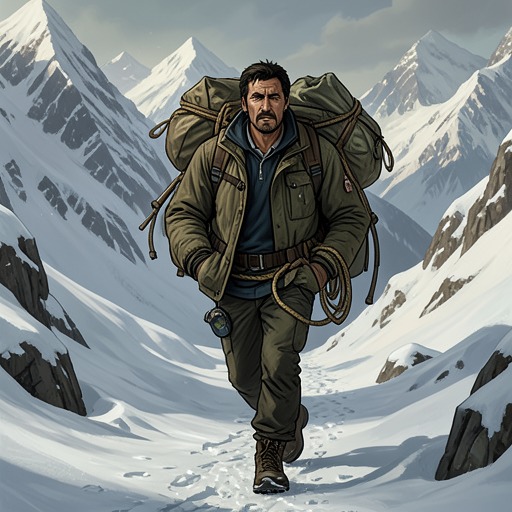
The ClimbPemba Sherpa was the Mountain Madness Sherpa left at Camp IV during the 1996 Everest summit attempt, with duties that included making tea and maintaining contact by radio. As exhausted climbers returned to camp in the storm, he supplied hot drinks and became a crucial point of contact for rescue requests. Yet the book’s accounts leave a consequential uncertainty around his role: messages traveled through an imperfect relay, oxygen was unavailable, and later recollections differed over what Pemba knew and what help could be organized.
Identity and Expedition Role
Pemba worked as a Sherpa on the Mountain Madness expedition. The broader commercial expedition setting placed Sherpas at the heart of the work that made climbing possible: they established camps, carried loads, and served climbers, often for daily pay ranging from $2.50 to $50. The book also describes disputes over who would fix the route and collect the associated fees, while anticipating that Sherpas might one day control access to the route as contractors. That context makes Pemba’s assignment at Camp IV more than a domestic detail: tea-making and radio availability sat alongside the expedition’s dependence on Sherpa labor in a high-risk environment.
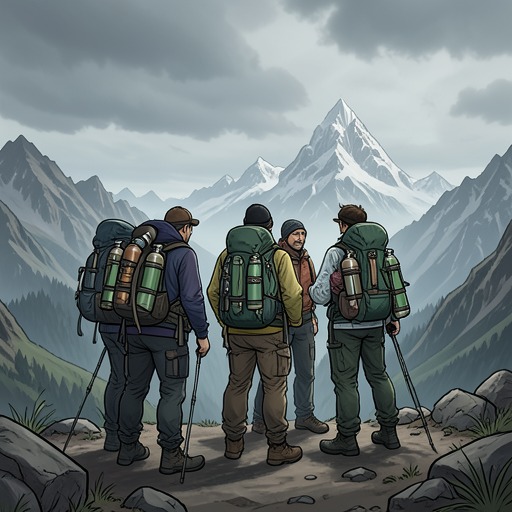
At the summit push, the team’s equipment and staffing were constrained. Six Sherpas were climbing; five planned to use oxygen, while the climbing sirdar, Lopsang Jangbu Sherpa, climbed without it, carrying one emergency canister. The other five carried two bottles for themselves and two for clients and guides. The later debrief identifies Pemba as the Sherpa left in Camp IV, where he was expected to make tea. He had one of the black radios at camp, an important distinction in an expedition whose radio equipment had already been criticized as antiquated.
The Summit-Day Communications Chain
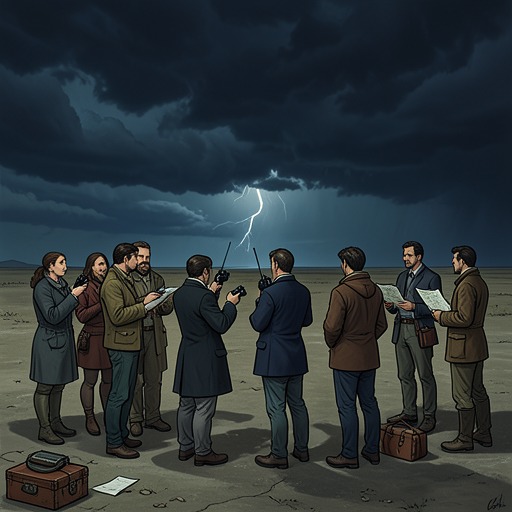
The radio did not make communication straightforward. Dr. Hunt’s account describes messages traveling from Base Camp through Ngima, then Gyalzen at Camp II, and onward to Pemba at Camp IV; messages coming down took the reverse route. Hunt believed that reports were sometimes augmented to present the situation more favorably, and communication with Pemba was sporadic. Pemba therefore occupied a position where he could receive or relay information, but not necessarily a clear or complete picture of events on the mountain.
After the summit, Boukreev said he had no radio contact and did not know that Hunt had asked Pemba to send oxygen upward. In the later recorded discussion, Lopsang stated that Pemba had a radio and that he himself had listened to communications involving Pemba. He recalled hearing that three oxygen bottles and tea were to be brought up, and said Pemba had been in contact with Camp II. Lopsang also described his own new radio as unusable, with the exchange suggesting a battery problem. The accounts thus distinguish Pemba’s working camp radio from the failed equipment affecting communication elsewhere, while leaving unresolved precisely what information reached each climber and when.
Tea, Oxygen, and the Emergency
As Boukreev descended toward Camp IV, he estimated that he arrived at about 5:00 p.m. Pemba met him carrying hot tea. Boukreev thought Pemba had attempted the climb and turned back, not knowing that he had been in camp all day. Expecting other climbers to follow, Boukreev asked him to prepare more tea before going to the tent shared by Martin Adams, Lene Gammelgaard, and Klev Schoening. The exchange records practical care in a moment of severe fatigue, but also a gap in communication: Pemba did not tell Boukreev about the reported emergency above the Hillary Step.
Later, when Adams reached the tent with ice on his face and little ability to answer questions, Boukreev removed his crampons, put him into a sleeping bag, and placed an oxygen mask on him. Pemba came with tea, apparently after seeing Adams arrive. He told Boukreev he had seen lamps approaching and believed more people would soon reach camp. After resting for about fifteen minutes, Boukreev searched outside again, but found no one in the darkness and worsening blizzard. Pemba’s observation offered a sign that others might be coming, not a reliable account of where they were or how many remained in danger.
In his own account of the rescue effort, Boukreev later described asking Pemba for a hot drink and for oxygen. Pemba said he had not found any bottles; Boukreev searched as well and found none. Boukreev then went among the Sherpas’ tents seeking help, but encountered silence and reluctance to go out into the dangerous conditions. When he returned from further attempts to enlist assistance, he asked Pemba again to bring tea, this time for Charlotte Fox and Neal Beidleman as well as for himself. The repeated requests show Pemba continuing to supply what he could at camp even as the available oxygen and the possibility of sending rescuers upward narrowed.
Requests for Further Help
After helping Charlotte Fox into Beidleman’s tent and transferring an oxygen mask to her, Boukreev again sought assistance from the Sherpas, including Pemba. He also approached Sherpas associated with Rob Hall’s expedition and checked tents belonging to the Taiwanese team, but found no one willing or able to join the effort. He asked Pemba for tea for Fox and Beidleman and later received tea himself. The scene links a small act of care to the larger shortage: drinks could be fetched, but oxygen could not be found, and the climbers were exhausted and reluctant to re-enter the storm.
After tending to Tim Madsen and Sandy Hill Pittman, Boukreev asked Pemba to try to contact Lopsang and to find two Sherpas and oxygen to go help Scott Fischer. Pemba agreed to try, but Boukreev then slept for about two hours and could not account for everything that followed. Lene Gammelgaard later remembered Boukreev returning around five in the morning, spent and nearly wordless. Her recollection confirms that he had brought Fox, Madsen, and Pittman into shelter, while he remained worried about the people still outside; it does not establish whether Pemba was able to arrange the requested expedition toward Fischer.
In the debriefing, Boukreev recalled asking Pemba for fresh radio power. He said Pemba replied that he would try to find it, but Boukreev also remembered that Pemba did not answer when he asked whether help could be found. Boukreev then asked Lopsang, who said he was sick and told him to go directly to Fischer. Boukreev weighed that appeal against the condition of other climbers and his belief, based on experience, that Fischer might survive a night near the summit. These recollections present Pemba as part of the chain of requests, but do not support a simple conclusion about refusal: his silence, the shortage of equipment, the danger, and the fractured communications remain part of the recorded account.
Narrative Significance
Pemba’s brief appearances gather the expedition’s dependence on material support into a single camp-side figure. Tea, oxygen bottles, and a black radio were not incidental props: each could sustain a climber, enable communication, or affect whether help could be sent. The radio connected Camp IV to a relay system that Hunt found sporadic; the oxygen was sought urgently but could not be located; tea was available and repeatedly brought to exhausted climbers. The contrast is concrete: some forms of assistance remained possible while others failed under the storm’s pressure.
The narrative does not give Pemba an extended personal history or a definitive account of his decisions. Instead, it approaches him through other climbers’ recollections and through questions asked in the later debrief. That structure matters. Pemba is visible as a worker entrusted with camp duties and as a potential link in emergency coordination, while the record of what he heard and could do remains incomplete. His role therefore illuminates both the essential labor supporting a commercial expedition and the limits of reconstructing responsibility when communication, equipment, and human capacity were all under strain.